

Business
What an offsite away from the office changes in the conversation
Why an offsite held away from the office produces different conversations, and the five practical conditions worth having in place.
Read the article
A team that knows it has been gathered to build the team behaves like a team that has been gathered to build the team. That is the paradox of the genre: the stated intention absorbs part of the intended effect. What works is a shared experience in which cohesion is the result rather than the subject.
The activity is rarely at fault: it is the frame put around it that weighs. As soon as an exercise is presented as a cohesion tool, everyone knows what is expected of them, and plays their part. The extroverts speak, the reserved wait it out, and the closing debrief produces conclusions everyone had already formulated before starting.
There is also an accumulation effect. Many employees have already done the escape room, the orienteering course, the cookery workshop and the karting. A fourth variant of the same mechanism usually earns polite agreement.
Three criteria separate the activities that genuinely produce something.
The activity gains from having its own reason to exist. Going out on the water at seven in the morning to see the shellfish tables and the flamingos is interesting in itself. The interest needs no explaining. Cohesion arrives on top, without being named.
It gains from redistributing competence. This is the central mechanism. In a professional activity, the hierarchy of competence reproduces the hierarchy of the organisation. On a paddleboard it recomposes entirely. The most confident person is rarely the one you expected, and the mutual help that develops follows lines other than the org chart. That is what produces a shared memory.
It gains from including everybody. This is the most delicate point. A physically demanding activity creates two groups: those taking part and those watching. The second group goes home with the opposite of the intended feeling.
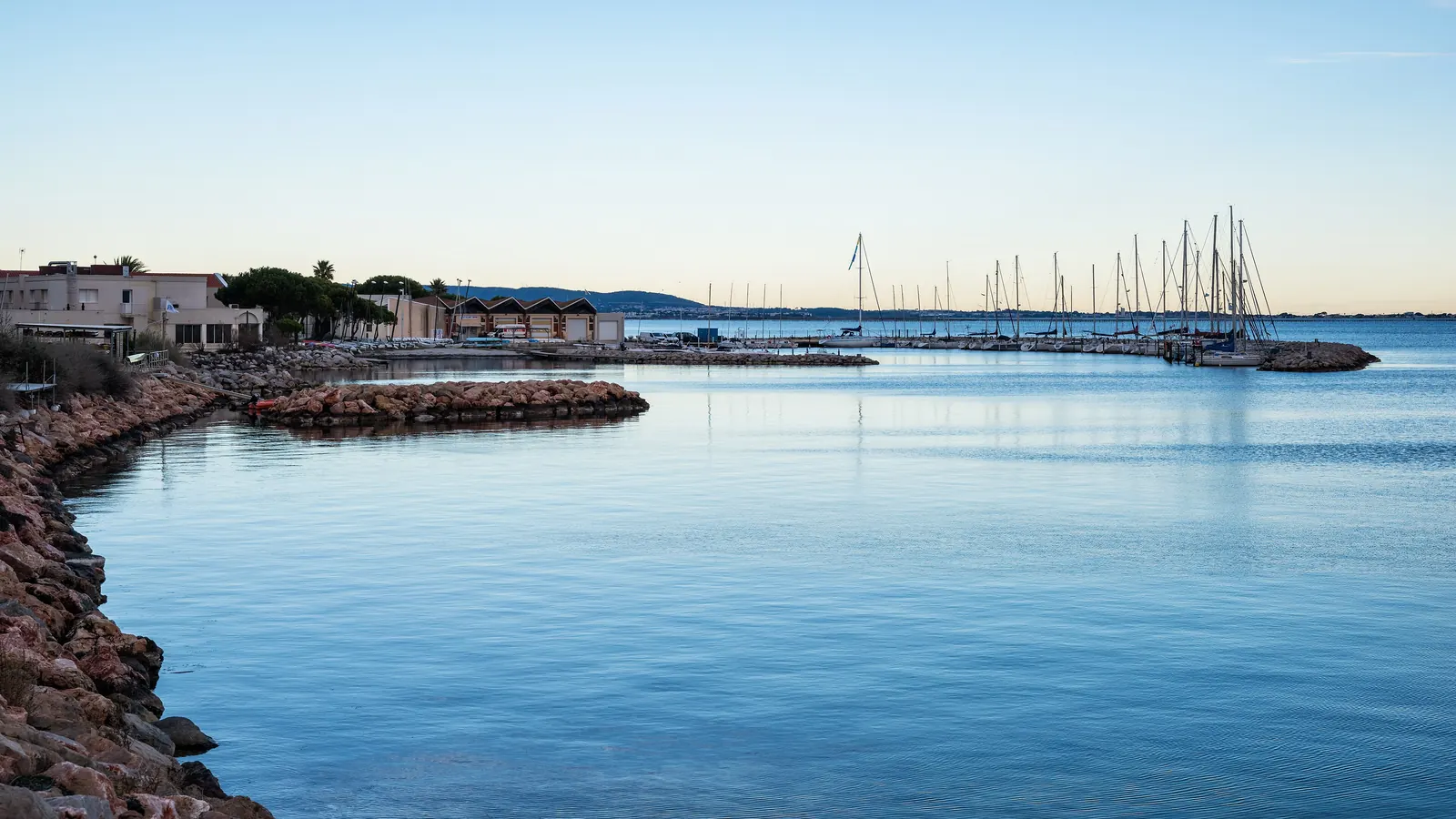
The étang de Thau has one feature that matters a great deal for a corporate group: it is shallow and its water stays flat. A lagoon produces at most a wind chop, which drops as soon as the wind does.
That changes everything for participants who are not sporty. On water where you can stand across much of the surface, apprehension disappears within minutes. Someone discovering the paddle is standing up on a board within half an hour. At sea, the same person would have stayed on the beach.
The water also warms far earlier than the sea and stays mild late in the season, which opens up April and May as well as September and October. For an offsite these are precisely the most interesting periods: outside the tourist season, with availability and good light.
The morning outing, one hour. Paddleboard or kayak, between seven and nine, when the lagoon is flat. Supervised by instructors, well away from any spirit of competition and from any ranking. You come back for breakfast, and the working session that follows is noticeably better than the previous day's.
The introductory regatta. For groups that want an explicit collective dimension while keeping their distance from an exercise. Sailing imposes a distribution of roles on board, and that distribution follows lines other than the org chart. The basin is a recognised training ground precisely because it offers wind with flat water.
The contemplative outing. Often underrated, and often the most effective with an executive committee. An hour on the water, with no objective, with an instructor explaining shellfish farming and the lagoon ecosystem. Little happens, and that is exactly why people talk.
A few practical markers, learned from watching groups split:
Three months later, the morning workshop has faded. What stays is the colleague from accounts who stood up on the paddleboard first time, and the person who helped him on. It is a very small thing, and it is exactly what you came for.
Photo: Jorge Franganillo, CC BY 2.0, via Wikimedia Commons
The étang de Thau is a shallow lagoon with flat water, which makes it the most forgiving stretch of water on the coast for beginners. A no-effort option, in an accompanied boat or from the shore, is planned for the same slot so that everyone finds their place.
April and May, then September and October. The lagoon warms earlier than the sea and stays mild late in the season, and these periods fall outside the tourist season, with more availability and better light.
The fallback is planned when you book, for the same slot rather than as a postponement. On a lagoon the wind decides: the tramontane makes paddling uncomfortable and sailing excellent.
Why an offsite held away from the office produces different conversations, and the five practical conditions worth having in place.
Read the article
What a turnkey offsite venue actually takes off your plate, and the questions to ask before you sign, so the six weeks before the date stay calm.
Read the article
Why lunch decides half of an offsite day, how the format shapes the afternoon, and how to plan catering that keeps the day alive.
Read the articleThis site uses only functional cookies, which it needs in order to work. No advertising or tracking cookies are set. By continuing, you accept our privacy policy.
