

Business
What a good provider takes off your plate
What a turnkey offsite venue actually takes off your plate, and the questions to ask before you sign, so the six weeks before the date stay calm.
Read the article
Taking a team out of the office sounds like a line from a brochure. The mechanism behind it is fairly simple: it is when the markers of the office fade that the conversations an offsite is meant to produce start happening. Here is why, and what is worth having in place for it to work.
A company organises an offsite for three reasons: to settle questions that resist video calls, to align a team on a direction, and to let people who work together talk to each other differently.
A standard hotel meeting room tends to produce something else: a longer than usual day of meetings, the same seats around the same table, the same people speaking in the same order, and a forty-minute lunch break too short to finish a conversation. You go home with minutes and the feeling of having moved the office fifteen kilometres.
This is the point brochures put poorly. A beautiful venue rarely generates better ideas by itself. What it does is shift the social markers that freeze discussion.
Three things unlock, and we see it every time:
Seats change. In a meeting room everyone sits where they always sit, and the hierarchy replays itself without anyone deciding it. Outside, on a terrace or around a garden table, seats redistribute. People who rarely cross paths end up side by side.
Time stretches. A fifteen-minute break in a hotel is a coffee and a phone. A fifteen-minute break in a garden is a walk between two people, and that is often where the question the meeting could not settle gets settled.
The evening joins the offsite. That is the structural difference between a day out and a residential format. What gets said after dinner, once the slides are closed, has little equivalent elsewhere. It is also, in many organisations, one of the rare occasions when someone speaks to a member of the executive team without an agenda.
A change of scene keeps its promise as long as the technical side follows. Five things to check before signing:
1. A real working room, rather than a repurposed lounge. With natural light, something to project onto, and a table you can reconfigure. Here the room takes 8 to 32 people in working configuration, and the estate can host around a hundred for a daytime or evening event.
2. A network that holds. A video call with a remote participant, a screen share, a large file to send: fibre belongs to the conditions rather than to the comforts. Asking what the connection actually is beats an answer along the lines of "the wifi works fine".
3. Accommodation on site. An offsite whose participants drive twenty kilometres to a hotel gives up its evening, which is to say half of its value. Here the 32 beds are on the estate, across three houses.
4. Exclusivity. Sharing a venue with a wedding or another group changes everything: the noise, the timings, the freedom to speak out loud. Exclusive use belongs to the working conditions rather than to the luxuries.
5. Real accessibility. The venue gains from being reachable without spending half a day on it. Here, Montpellier TGV station is 35 minutes away, the A9 motorway exit is under 30 minutes, and parking is on site.
A venue that presents its constraints as charm calls for a little vigilance. A room with no network, a bedroom with no air conditioning in July, an approach that requires two train changes: so many friction points that cost in attention what the setting gives in energy.
The right test is the organiser's test: is the person running this offsite going to spend the day solving practical questions, or will they be able to take part like everyone else? In the first case the venue still needs work, whatever the view.
A team that has had dinner outside, spent an hour on the water or in a garden, and comes back into the room the next morning works differently from the day before. People speak more directly, disagreements come out earlier, and decisions get made.
The venue does none of this by magic. It is simply what happens when the markers that make people behave like functions give way to the ones that make them behave like people.
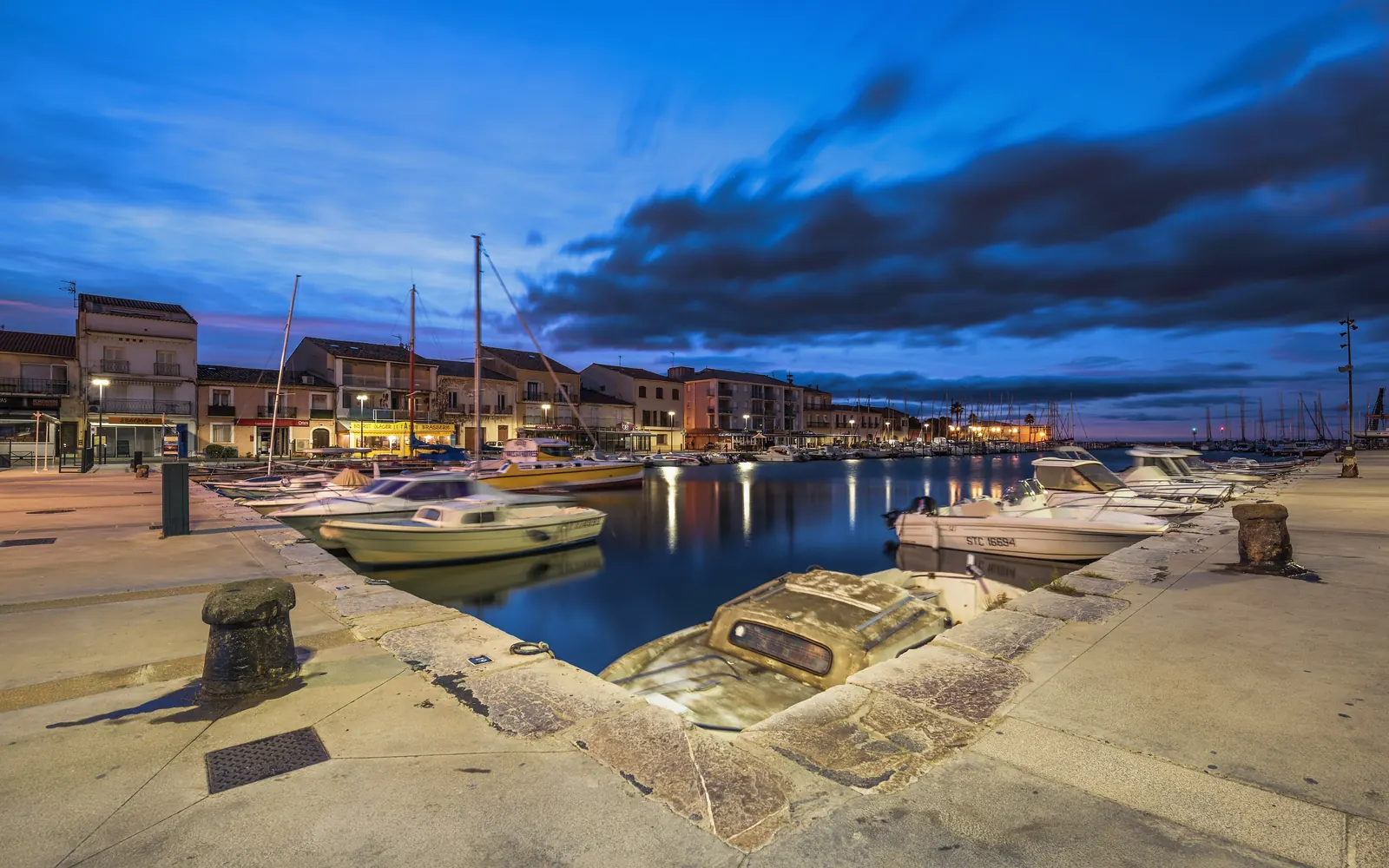
Photo: Christian Ferrer, CC BY 4.0, via Wikimedia Commons
From 8 to 32 people in working configuration. The estate can also host around a hundred people for a daytime or evening event. The capacity of the room is distinct from the 32 beds: here, everyone can work during the day and sleep on site.
Montpellier TGV station is 35 minutes away, the A9 motorway exit under 30 minutes, and parking is on site. This criterion weighs more than it appears: a hard-to-reach venue costs half a working day per participant.
Yes, high-speed fibre runs throughout the house. A session with a remote participant or a screen share runs normally.
What a turnkey offsite venue actually takes off your plate, and the questions to ask before you sign, so the six weeks before the date stay calm.
Read the article
Why lunch decides half of an offsite day, how the format shapes the afternoon, and how to plan catering that keeps the day alive.
Read the article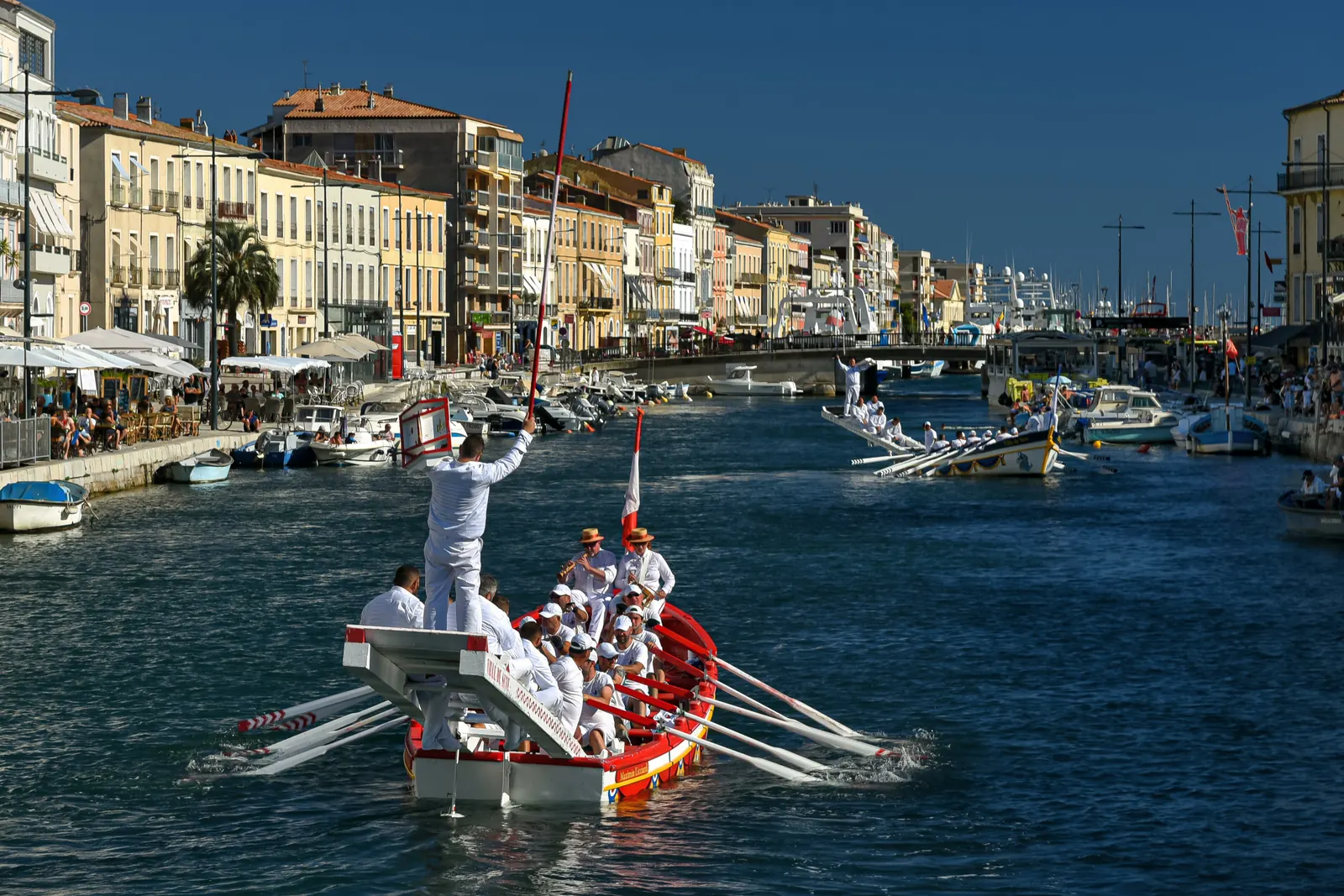
Why a shared adventure brings a team closer than an announced cohesion exercise, and how to build an outing on the étang de Thau that includes everyone.
Read the articleThis site uses only functional cookies, which it needs in order to work. No advertising or tracking cookies are set. By continuing, you accept our privacy policy.
