

Business
What an offsite away from the office changes in the conversation
Why an offsite held away from the office produces different conversations, and the five practical conditions worth having in place.
Read the article
When an HR manager or an office manager looks for an offsite venue, what they are really looking for is peace of mind: spending the six weeks before the event on something other than chasing five different contacts, and living the day itself with something other than a phone in hand. The venue is a prerequisite. What is actually being sold is the certainty that it will run.
What the company sees is an invoice with a number of room-nights and a room hire fee. What the organiser does is something else: reconciling dates across four executive calendars, gathering dietary requirements, coordinating a caterer whose hours differ from the venue's, booking transfers from the station, planning a fallback in case the outdoor activity is rained off, and welcoming the three people who arrive late on the first evening.
None of those tasks appears in a quote. All of them take time, and that time has a cost the company rarely measures, because it is absorbed into a salary already being paid.
Here is the breakdown we use, item by item. It works as a comparison grid, whatever venue you are looking at.
Before. Settling dates against real availability, a single quote covering accommodation, the room and catering, collecting dietary constraints, configuring the room for the chosen working format, and organising activities with local providers.
On arrival. The welcome, room allocation decided in advance rather than in the car park, and a technical check of the projection equipment and the network before the first participant walks into the room.
During. Meals at the agreed times, including when a session runs forty minutes over. Restocking the breaks. One person, reachable, who knows the place.
After. One invoice, rather than five.
That last point matters more than it looks. One invoice means one purchase order, one approval chain, and a finance department that leaves you in peace three weeks later.
Offsites that go off the rails more often lack deadlines than time. Here is the schedule we see working, to be adapted to the size of the group.
Six weeks out. Dates locked, venue booked, single quote signed. This is the only genuinely rigid milestone: beyond it, availability at exclusive-use venues closes up, particularly from May to September.
Four weeks out. Working programme fixed, room format chosen, outdoor activity booked with its weather fallback. This is also the moment to send the invitation with the dietary requirements form.
Two weeks out. Final participant list, room allocation decided, menus approved, station transfers arranged. What is settled at this stage gets settled calmly; the rest gets settled in a rush.
Three days out. Technical check with the venue: projection equipment, network, service times, arrival time of the first and last participant.
The day before. Nothing. A free day before is the surest sign the provider has done their part.
1. "How many people will I be dealing with, from quote to invoice?"
The right answer is one. When the venue, the catering and the activities go through three different contacts, the coordinating falls to you.
2. "Who is on site on the day, and how do I reach them?"
A first name and a mobile are worth more than a switchboard number.
3. "What happens if a session runs forty minutes over?"
This is the most revealing question. A venue with rigid service slots will impose its rhythm, and an important discussion will be cut short so people can go and eat. A venue that adapts says so without hesitating.
4. "What is the plan B if the outdoor activity is cancelled by the weather?"
A prepared answer is worth more than one improvised on the day.
One point of contact, from the first exchange to the event, and it is the same person following the file from end to end. The estate is exclusively yours, so your timings stay yours. Catering goes through a partner caterer or a private chef, with meals set around your programme rather than the other way round: breakfasts, working lunches, closing dinner.
Accommodation, the meeting room and the meals are on the same site, which spares anyone the car between two sessions. And the 32 beds let you keep everyone on site, including participants who arrive late.
The best measure of a successful offsite, from the organiser's point of view, comes down to one observation: were you able to attend the sessions like the other participants, or did you follow them from the corridor?
A successful offsite is one the participants enjoyed, and one the organiser walked away from having been able to take part.
Photo: Christian Ferrer, CC BY 4.0, via Wikimedia Commons
One. The same person follows the file from the first exchange through to the event, and invoicing is single: one purchase order, one approval chain, one invoice.
Yes. The three houses can be booked separately or together, depending on the size of the group. For a residential offsite of more than twenty people, taking the whole estate keeps the site to your group alone.
Six weeks is the realistic minimum to lock dates, venue and quote. From May to September, availability at exclusive-use venues closes up considerably earlier.
Why an offsite held away from the office produces different conversations, and the five practical conditions worth having in place.
Read the article
Why lunch decides half of an offsite day, how the format shapes the afternoon, and how to plan catering that keeps the day alive.
Read the article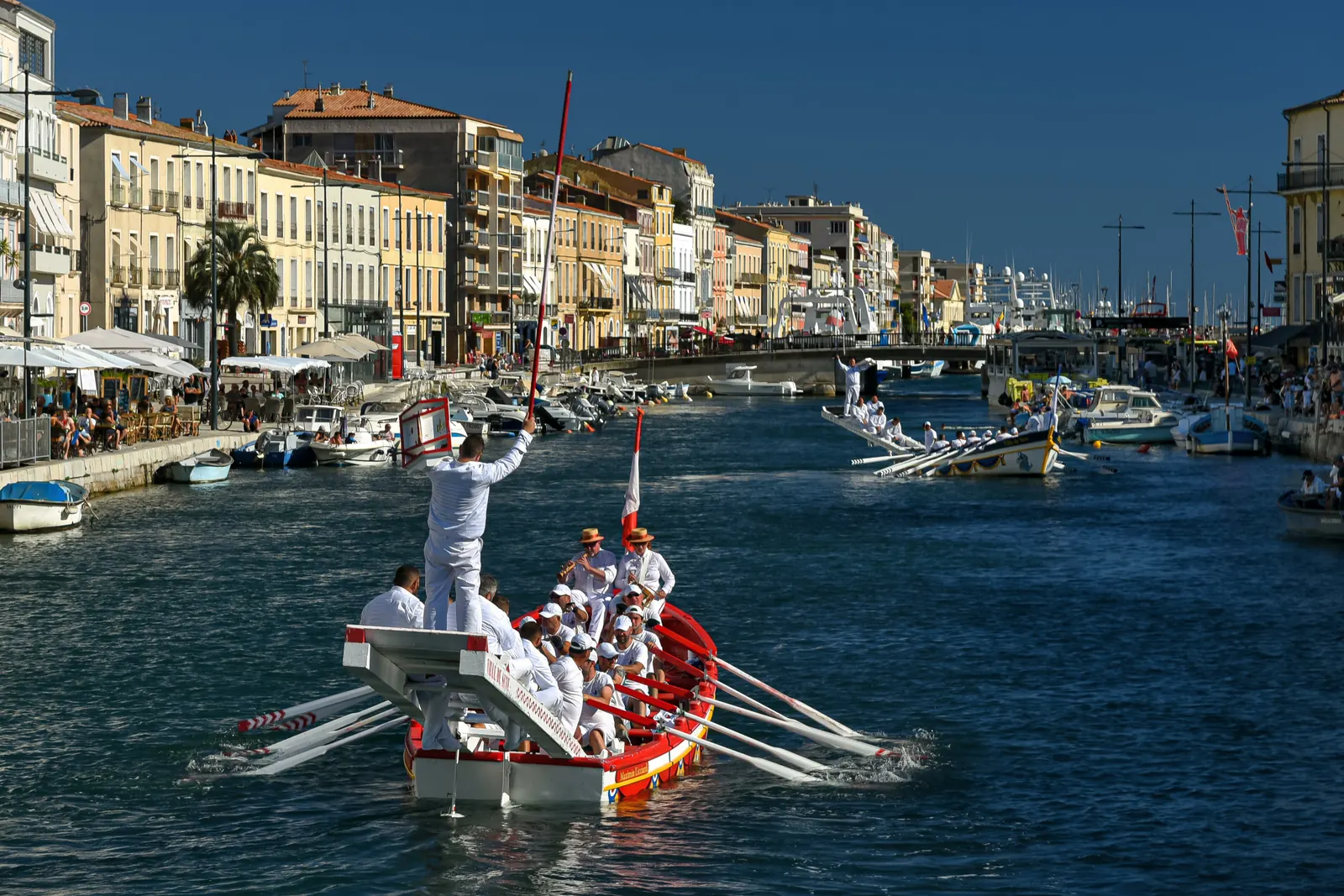
Why a shared adventure brings a team closer than an announced cohesion exercise, and how to build an outing on the étang de Thau that includes everyone.
Read the articleThis site uses only functional cookies, which it needs in order to work. No advertising or tracking cookies are set. By continuing, you accept our privacy policy.
