

Stays
The étang de Thau reveals itself from the water
Paddleboard, kayak, sailing and oyster tables: what the étang de Thau looks like from the water, and when to go out to see it at its best.
Read the article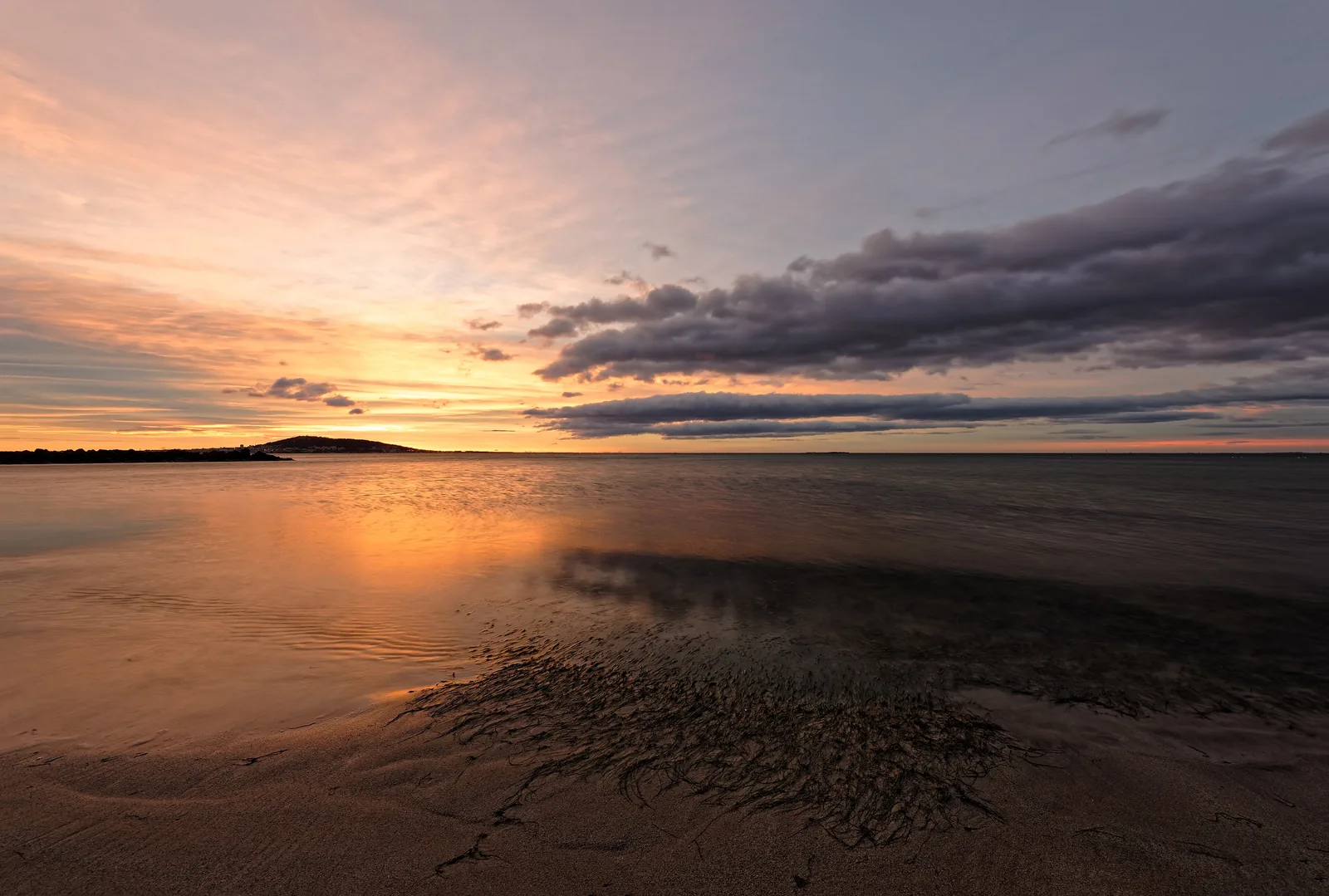
From October to March the lagoon empties of visitors and becomes twenty kilometres of water on which almost nothing happens. That is precisely what makes it beautiful. The sun sits low, the air is washed clean by the tramontane, and the lagoon starts reflecting the sky in a way it never does in August. Here are three appointments not to miss, with the hour, the place and what to take with you.
In the late season the wind gets up later. Between first light and nine o'clock the lagoon is almost always smooth, and the oyster tables double themselves in the reflection. It is the only time you see the water as a surface, without a ripple, with the outline of Mount Saint-Clair set at the far end.
Where to stand: on the north shore, facing south-east. The second harbour at Mèze, the point at Bouzigues, or any path between the two. From the estate, the private access to the lagoon looks straight that way.
Worth knowing: it is cold, far colder than you would expect at this latitude, and the damp off the lagoon goes straight through a thin jumper. Take a proper coat and shoes that do not mind dew. A flask works better than the idea of coffee on the way back.
What the regulars do: this is also the ideal hour to go out on the water. We set it out when writing about the lagoon seen from the water: a paddleboard at eight in October means a mirror, while the same paddleboard at three in the afternoon belongs to the wind.
This is the moment the regulars prefer, and the least known. In October the sun moves west late in the afternoon and strikes the water head on from the lido. The lagoon turns white, almost metallic, and everything on it, boats, tables, herons, stands out in black.
Where to stand: on the north shore again, but this time with Bouzigues behind you, looking towards Sète and the lido. The corniche at Sète gives the same effect on a wider scale, with the open sea on the other side of the road.
Worth knowing: the light lasts less than an hour, and it changes minute by minute. There is no point driving from one spot to another: pick a place and let it come to you. For photographs it is the moment when a phone does as well as a camera, provided you lock the exposure on the bright part of the water.
What the regulars do: follow it with oysters. The shellfish farms at Bouzigues and Marseillan are open at that hour, the water has been cold for several weeks, and the flesh is at its best.
The sun goes down behind the Gardiole hills, and a lot of people head back at that point. It is a mistake. The twenty minutes that follow are the finest: the sky turns deep blue, the lights of Sète and Balaruc come on across the water, and the lagoon still holds a little brightness. The noise drops all at once, and you can hear the rigging on the boats.
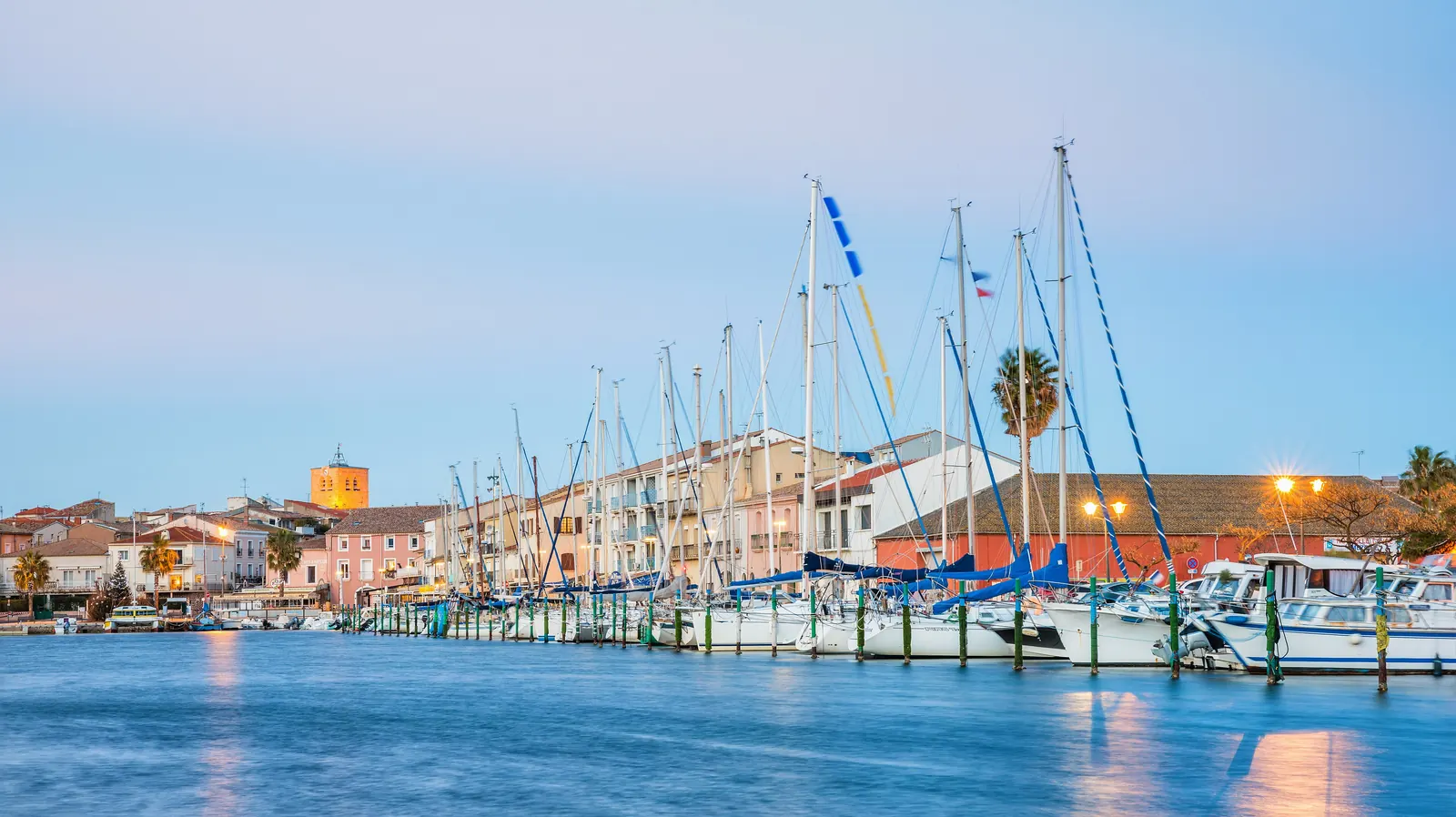
Where to stand: both harbours at Mèze work very well, because you have the boats in the foreground and the town opposite. From the pine wood on the estate, the same sky can be watched from a chair, which is worth something in November.
Worth knowing: the blue hour moves fast through the season. At the end of October it falls around seven in the evening, at the end of November around half past five. Check the time of sunset that morning, and count twenty minutes after it.
What the regulars do: it is the best moment for a drink outdoors, and not only in summer. A jumper, a blanket, a glass of picpoul, and the evening starts an hour earlier than planned.
Three things come together from September to March. The sun is low, so the light arrives horizontally and grazes the water instead of flattening it. The air is drier after each spell of tramontane, and on some days you can see as far as the Pyrenees. And the lagoon is given back to its fishermen and shellfish farmers: there is almost nobody on the water, so almost no wake.
To which one prosaic but decisive detail can be added: you share none of these three appointments with anyone. That is also why people do not want to leave.
Three hours in a day, no more: dawn for the flat water, four in the afternoon for the backlight, the blue hour for the quiet. In between, the lagoon is ordinary, and that is exactly as it should be. A late-season stay is built around those three appointments, and the rest of the day is spent reading in the sun.
Photo: Christian Ferrer, CC BY 4.0, via Wikimedia Commons
October to March for the light and the quiet. The water is flat in the morning, the shellfish are at their best, and the villages around the lagoon return to their own pace.
From the north shore, between Bouzigues and Mèze, looking towards Sète and the lido. The two harbours at Mèze are the easiest places to reach.
The days are often mild and sunny, but mornings and evenings are cool, and the damp off the lagoon is noticeable. A proper coat is useful from November onwards.
Paddleboard, kayak, sailing and oyster tables: what the étang de Thau looks like from the water, and when to go out to see it at its best.
Read the article
What separates a villa you visit from a villa you leave with regret: orientation, shade, short distances and places to be alone.
Read the article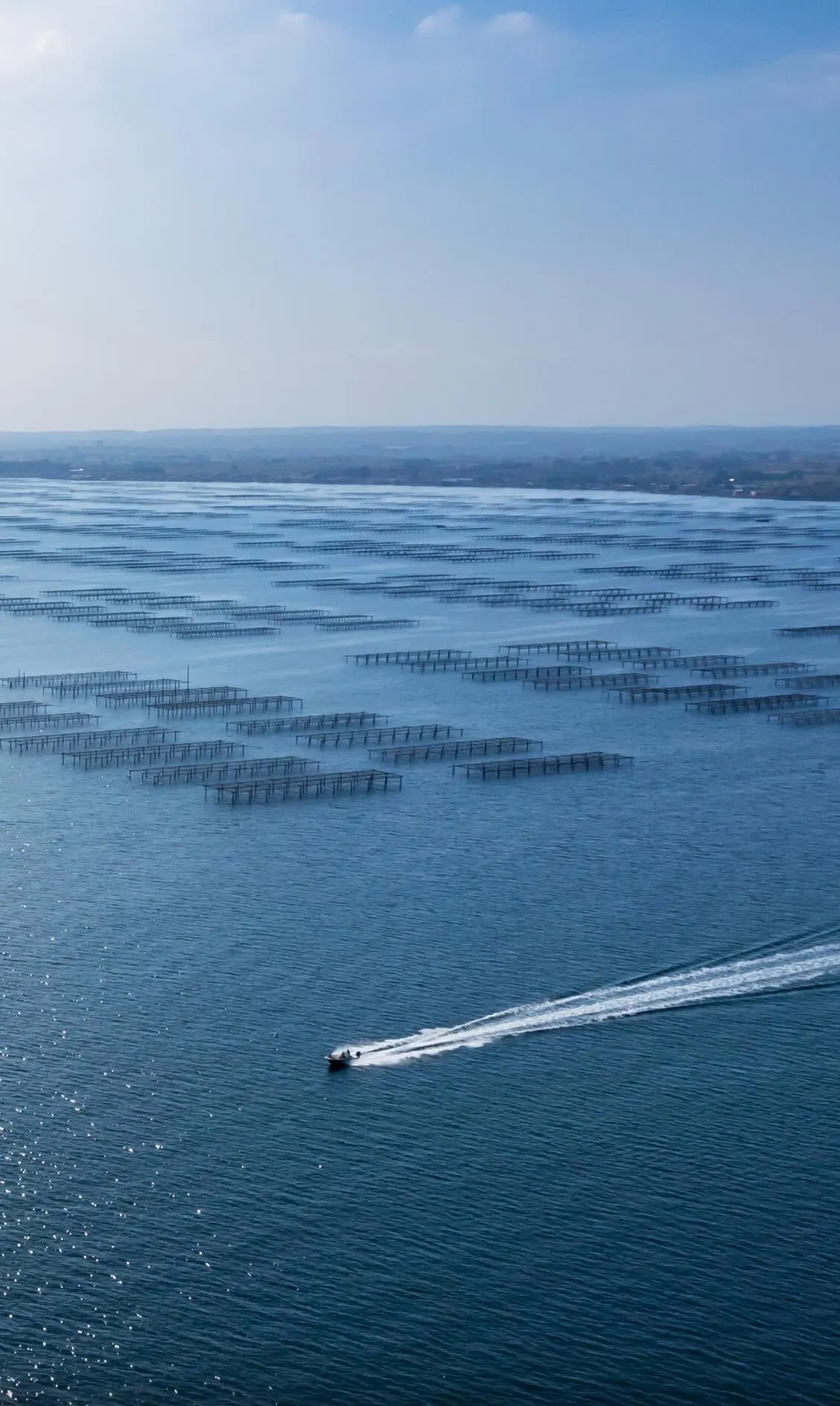
Sète, Bouzigues, Marseillan, one outing a day: five ways to overload a week around the lagoon, and the rhythm that lets it breathe.
Read the articleThis site uses only functional cookies, which it needs in order to work. No advertising or tracking cookies are set. By continuing, you accept our privacy policy.
