

Stays
The étang de Thau reveals itself from the water
Paddleboard, kayak, sailing and oyster tables: what the étang de Thau looks like from the water, and when to go out to see it at its best.
Read the article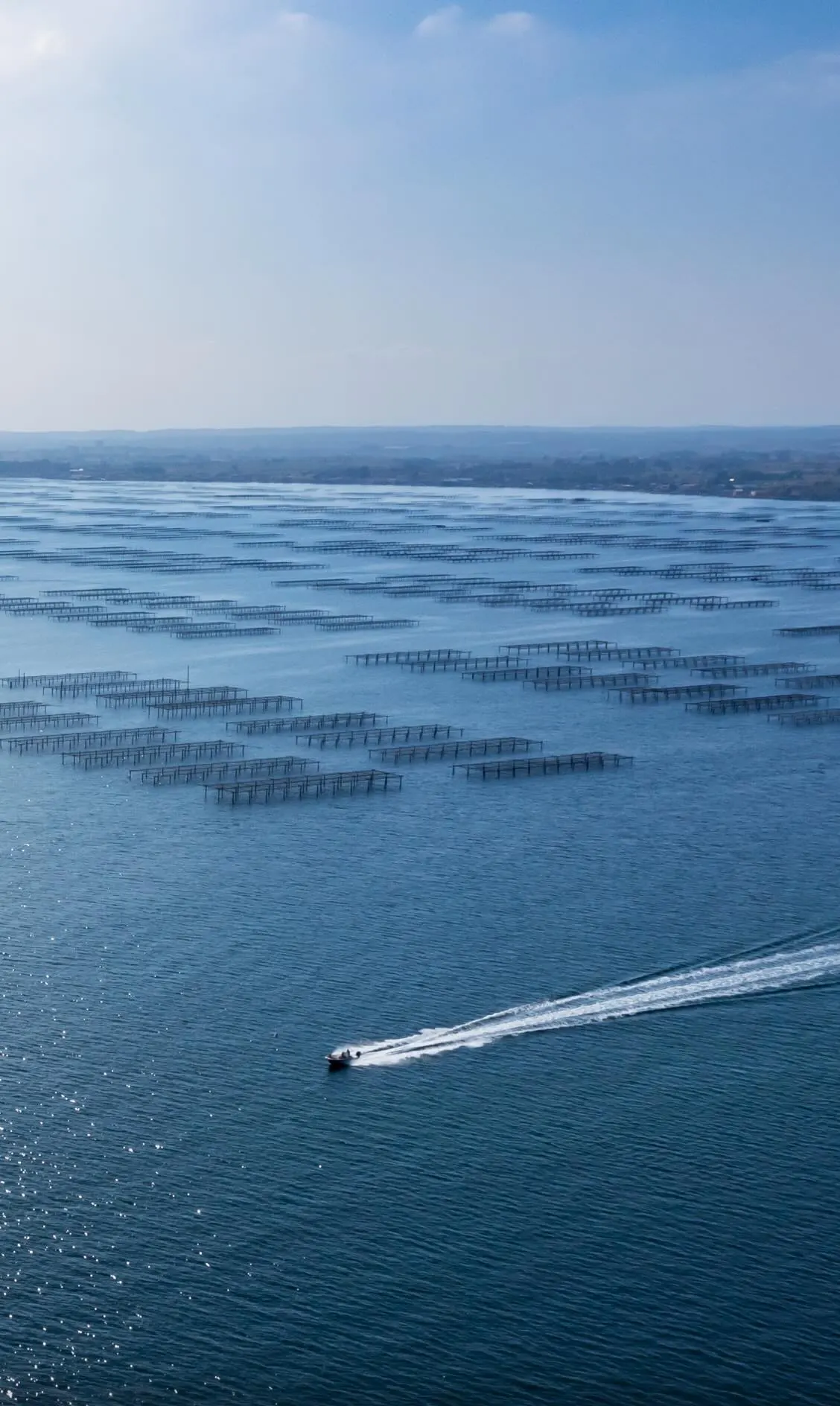
The basin fits into twenty kilometres. Sète, Bouzigues, Mèze, Marseillan, the Canal du Midi, the beaches of the lido: everything is within reach, and that is exactly what makes people want to programme all of it. Yet the families who leave already looking for dates to come back are rarely the ones who saw everything. Here are the five most common ways to overfill a week, and the rhythm that serves better.
A week has seven mornings. Each outing takes one of them, plus the time to gather the group, park and come back. At two or three activities a day, the day is mostly spent in transitions.
The other effect is quieter. A dense programme brings timetables, appointments and someone counting heads. Unhurried time, which is often what people came for, lives in the gaps, and a tight programme closes them.
Sète to the north-east, Bouzigues and Mèze on the northern shore, Marseillan to the south-west: twenty kilometres separate the ends of the basin, and the full loop takes a good hour and a half of driving once you count the villages. Doing all three in a day means spending most of it in the car, and arriving everywhere at the wrong hour: the market hall closed, the shellfish farms in the middle of service, the harbour at Marseillan when the sun is at its hardest.
What works: one shore a day, in the morning. Sète one day, the northern shore another, Marseillan and the Canal du Midi on a third. The rest of the day happens where you are staying.
This is the costliest one, because it spoils the activity itself. On a lagoon the wind gets up as the day goes on: between seven and ten the water is almost always flat, and the afternoon belongs to the tramontane or the marin. A paddleboard booked for three in the afternoon in August means a short chop and beginners giving up after twenty minutes.
What works: going out early, before breakfast, and keeping the afternoon for the shade and the pool. The light and the silence at seven are worth the alarm on their own.
In a group of fifteen or twenty, a daily shared activity looks like the thing that brings everyone together. In practice it imposes one rhythm on everybody: the early risers wait, the teenagers go along with it, and someone spends the week taking the register.
What works: two shared fixtures a week, hardly more. One outing on the water, one long dinner. In between, sub-groups form on their own, and that is often where the best memories come from.
Carcassonne, the Pont du Gard, the Camargue, the Hérault gorges: all of them are an hour and a half to two hours away. In a group, with children and several cars, an excursion like that takes the whole day and a good part of the next one.
What works: one long excursion in the week, chosen together, and everything else within twenty minutes. The basin holds enough for seven days: the Sète market halls in the morning, the shellfish farms at Bouzigues, Mont Saint-Clair at sunset, the Canal du Midi at Les Onglous.
The day before departure gets programmed like the others, because there are still things to see. It serves another purpose: packing without rushing, one more swim, one last dinner outside. Filled up, it turns leaving into a sprint.
What works: leaving it empty. It is almost always the day the group talks about on the way home.
They all start from a good intention: making the most of it, missing nothing, getting the best out of the week. And they all rest on the same idea, that a stay is measured by the number of things seen. The notes we receive six months later say something else: what stays is a breakfast that ran until eleven, a paddleboard outing at seven in the morning, a table still full at midnight.
Across a week, here is the pattern that comes back most often among the groups who leave rested:
Four lines for seven days. It looks thin on paper, and it is already a great deal once you add the hours at the table, the naps and the swims that happen on their own.
Three mornings out and one longer excursion are plenty for a group. Beyond that, the day fills with journeys and waiting, and the free time, which is where most of the memory comes from, disappears.
Between seven and ten in the morning. The lagoon is almost always flat then, whatever the season, and the wind gets up afterwards. The afternoon suits sailing better than paddleboarding or kayaking.
Yes for the morning slots in July and August, which are the most sought after. The estate's slipway is private, which leaves you free to go out without booking the rest of the time.
Paddleboard, kayak, sailing and oyster tables: what the étang de Thau looks like from the water, and when to go out to see it at its best.
Read the article
Quayside restaurants, oysters at the wrong time, the market too late: what the regulars do to eat well in Sète.
Read the article
What separates a villa you visit from a villa you leave with regret: orientation, shade, short distances and places to be alone.
Read the articleThis site uses only functional cookies, which it needs in order to work. No advertising or tracking cookies are set. By continuing, you accept our privacy policy.
