

Stays
A good holiday is a place you stay in
What separates a villa you visit from a villa you leave with regret: orientation, shade, short distances and places to be alone.
Read the article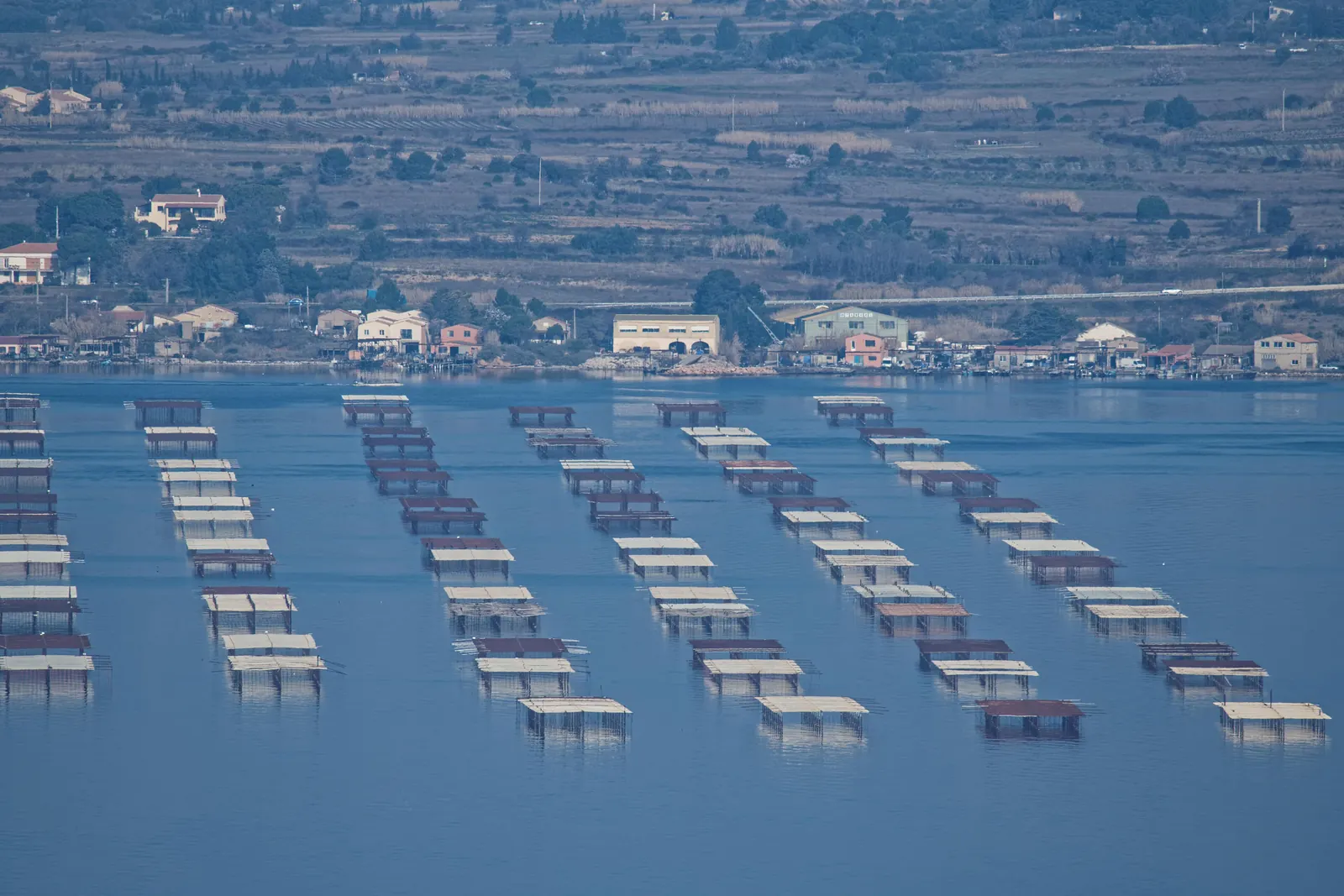
People rarely come back from here talking about a landscape first. They come back talking about a plate of oysters opened at the water's edge, a white wine they were discovering, a slice of tielle bought at the market at eleven in the morning. The Thau basin is eaten as much as it is looked at. Here is how to go about it, especially in a group.
That is the starting point, and it changes everything. The étang de Thau is a working production area as much as a landscape. The shellfish tables you can see from the shore, those lines of posts a few hundred metres out, are active oyster and mussel farms. What you eat in the evening spent the morning five minutes from the house.
That proximity has a practical consequence: freshness here is a geographical fact more than a sales pitch. And a consequence for taste: the Bouzigues oyster, raised in brackish water rather than open sea, has fuller flesh and gentler salinity than an Atlantic oyster. Anyone with reservations about oysters gains from trying one here before deciding.
Bouzigues oysters and mussels. On site, at the shellfish farms lining the lagoon between Bouzigues, Mèze and Marseillan, or delivered to the estate. In a group, the second option spares three cars and an hour of looking for parking.
Tielle sétoise. A pie of octopus in a spiced tomato sauce, originally a sailors' dish. Eaten cold or warm, at any hour, and the best beach snack in existence. You will find it at the Sète covered market and at bakeries around town.
Macaronade. The Sète Sunday dish: pasta, a long-simmered sauce, meat. Generous, made for a table full of people, better ordered than attempted yourself the first time.
Picpoul de Pinet. The basin's white appellation, from the slopes north of the lagoon. Sharp, lemony, made for shellfish. It is the most obvious pairing in the region, and it works every time.
Noilly Prat. The vermouth produced in Marseillan, at the far end of the lagoon, in casks aged in the open air. Worth tasting there, or bringing back.
If you only did one food-related thing all week, this would be it. The covered halles in Sète are a town market before they are an attraction: local people do their shopping there. Fishmongers, charcutiers, cheesemongers, a few counters where you eat standing up.
The right slot is early, between eight and ten, before the heat and before the groups. One in the afternoon on a July Saturday, with parking to find for two cars, leaves quite another memory.
One organisational tip for a group: two people are enough. They come back with plenty to feed everyone, and the other six keep their morning.
This is the real subject of a group holiday. A good address fifteen kilometres away, with no booking, on a mid-August evening, turns easily into a lost evening. Three principles hold up well:
1. One meal out, no more, per three days. Going out as twenty people takes an amount of organising that absorbs part of the benefit. The rest of the time you eat better, and more calmly, at home.
2. Bring people in rather than going out. A private chef for the arrival dinner, a caterer for the celebration meal, a seafood platter delivered: the cost per head is often lower than an equivalent restaurant, and everyone can raise a glass.
3. Book what matters as soon as your dates are fixed. In July and August, the shellfish farm tables and the good restaurants in Sète fill up weeks ahead.
The best meal of a stay here is rarely in a restaurant. It happens outside, after dark, at a long table, with what was brought back from the market that morning, cooked on the pool house plancha, and a bottle of picpoul out of the fridge.
It is the format we see come back most often, by a distance. It costs almost nothing, it does without booking, and it is the one people talk about on the way home.
We prefer to pass them on in person rather than publish them: they change, some close, others become too well known to stay pleasant. We hand them over on arrival, up to date, with opening times and the names of people to ask for. It is one of the advantages of a place run by those who live in it.
Photo: Olivier Dugornay / Ifremer, CC BY 4.0, via Wikimedia Commons
Yes. Producers around the basin deliver to the estate, which spares the journey and parking several cars. A seafood platter delivered for the evening is one of the simplest options for a large group.
The covered halles in Sète, in the morning between eight and ten, remain the best starting point for fish, charcuterie and tielle. For anyone who would rather arrive empty-handed, a market basket can be left before you get here.
Picpoul de Pinet, the white appellation produced on the slopes north of the lagoon. Sharp and lemony, it is the most obvious local pairing, and it works with oysters as well as mussels.
What separates a villa you visit from a villa you leave with regret: orientation, shade, short distances and places to be alone.
Read the article
Shopping, meals, cleaning, arrivals: what a turnkey villa takes off your hands, and what to check so a large house stays a holiday.
Read the article
Paddleboard, kayak, sailing and oyster tables: what the étang de Thau looks like from the water, and when to go out to see it at its best.
Read the articleThis site uses only functional cookies, which it needs in order to work. No advertising or tracking cookies are set. By continuing, you accept our privacy policy.
