The situation comes up more often than people think: a team that has just recruited, two departments a reorganisation has pushed together, a company where remote work means people have collaborated for two years without ever meeting. Here the activity is not there to bond an established group, it is there to get strangers talking. Three formats manage it, and what they share is lasting under ninety minutes.
1. The morning outing, in assigned pairs
Paddleboard or kayak between seven and nine, when the lagoon is flat. What produces the effect here is not the activity, it is how the pairs are put together.
How it runs: crews are formed in advance, crossing departments, and announced on site rather than emailed the night before. An hour on the water, back for breakfast.
What it asks for: instructors, an early slot, and someone willing to own the pairing. That is the only real constraint, and it is entirely organisational.
Why it works on strangers: a two-person kayak forces coordination within a minute of setting off, with no preamble and no introductions. The first fifteen minutes settle what a round of introductions takes half a day to produce. And since nobody is comfortable, nobody has a standing to defend.
2. The beginners' regatta, in crews of three
For groups that want a visible collective dimension. The schools on the northern shore take complete beginners, and the basin offers wind with flat water.
How it runs: half a day, dinghies sailed three up, an instructor on the water with the crews, and a short course repeated several times rather than one long race.
What it asks for: a swimming test checked by the school, a full half-day in the programme, and a booking made several weeks ahead from May to September.
Why it works on strangers: sailing imposes a distribution of roles on board, and that distribution follows lines other than the org chart. The helm is not the most senior person, and everyone notices at the same moment. We described this in team building that does not look like team building: it is the shift in competence that creates the memory, not the feat.
3. The trip with no objective, for a small group
An hour on the water, in a boat or a small group, with an instructor explaining shellfish farming and the ecology of the lagoon. No challenge, no ranking, no debrief.
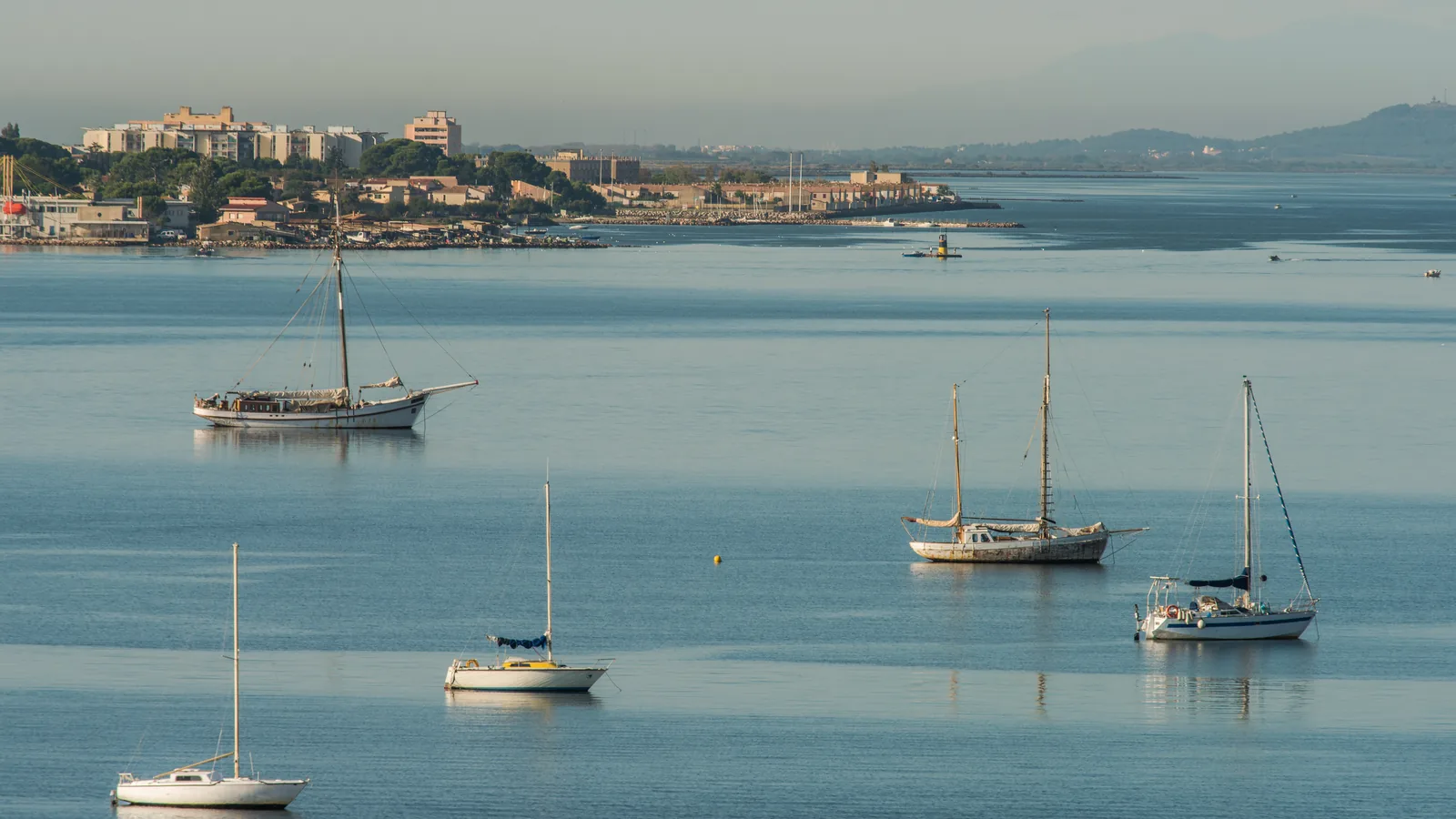
How it runs: you get on board, you listen, you look. The shellfish tables at first light, flamingos a hundred metres off, Mont Saint-Clair at the back. The instructor talks for twenty minutes out of sixty.
What it asks for: very little. A slot, a boat, and accepting that nothing spectacular will happen.
Why it works on strangers: it is the most underrated format and often the most effective with an executive committee or a group of managers sizing each other up. When nobody has to perform, conversations start on their own, and for the first twenty minutes they rarely turn on work. Which is exactly the point.
What the three share, and the question to ask
None of them runs beyond ninety minutes, and that is deliberate: past that, the experience becomes an ordeal for part of the group, and what had brought people together starts to separate them.
None of them produces a winner either. As soon as a ranking appears, colleagues who barely know each other line up behind whoever wins, and the activity manufactures the hierarchy it was meant to suspend.
The useful question before choosing stays the same: what has to happen afterwards? If the day has to end in a collective decision, the regatta prepares the ground well. If it has to get people talking, the morning outing is enough. If the group is small and sizing itself up, the contemplative trip beats the other two. The rest belongs to the catalogue, and we have said what we think of that.
What it comes down to
Three short formats, no ranking, and pairs composed in advance rather than left to chance. On water that forgives, that is enough for colleagues who had never met to go home with something to tell each other.