

Business
What a good provider takes off your plate
What a turnkey offsite venue actually takes off your plate, and the questions to ask before you sign, so the six weeks before the date stay calm.
Read the article
Offsite quotes are almost always comparable on paper, and almost never comparable in practice. What separates them is not the price per head but four answers few organisers ask for before signing. Here they are, with the precise answer a serious venue gives without hesitating, and the one that should postpone the signature.
Exclusive use is the most elastic phrase in the business. It can mean a whole estate given over to one group, or a private room in a place hosting three other events the same day, with a shared car park and a shared corridor.
The answer you hope for: a perimeter and times. "The whole estate is yours, from two on Tuesday afternoon to eleven on Thursday morning, with no other group on site during that period." That can be checked, and it goes into the contract.
What is worth following up: "you will have your own space", or exclusive use that starts at six in the evening on day one. In that case your first afternoon happens next to somebody else's offsite.
Why it matters so much: a group that is not alone never fully drops its guard. That is the whole difference we described between a meeting room and a private venue.
An offsite involves a venue, meals, rooms, sometimes activities and transport. Each of those can have its own contact, and it is then the organiser who does the coordinating, in the evenings and at weekends.
The answer you hope for: a name, once. "You will have the same contact from the first quote to the group's departure, and they will be on site during the event." Ideally with a number that works on the day.
What is worth following up: a sales team that sells, an operations team that delivers, and a caterer you are left to contact yourself. It is not necessarily disqualifying, but you then have to budget the coordination time, and not discover it the day before.
The follow-up question: "who decides whether we move the workshop outdoors at three?" The answer reveals the venue's real flexibility straight away.
This is the question that changes the running order most, and it is almost always reduced to one line on a quote. A lunch served at table in an hour and a buffet that stretches to ninety minutes do not produce the same afternoon.
The answer you hope for: a format, a duration, a place, and the name of the supplier. "Lunch served at table, outside if the weather allows, one hour, by our partner chef. Dinner at eight, three courses." The detail tells you the venue knows what it is doing.
What is worth following up: "packed lunches" as the default answer, or no timings at all. We devoted a whole article to false economies on the quality of offsite meals: the lunch break is the one sequence that either restarts a day or kills it.
The points worth putting in writing: dietary requirements and the deadline for sending them, the timing of coffee breaks, and what happens if a session overruns by twenty minutes.
In Occitanie the question is not theoretical. An offsite built around a terrace and a session on the water can lose both on the same day, and that is when you discover the real capacity of the indoor rooms.
The answer you hope for: a fallback with figures. "The indoor rooms hold up to 60 people, and more than a hundred outside: a whole workshop can come inside without reorganising the day." On the water, a serious operator also states its wind threshold and its cancellation rule.
What is worth following up: "we get three hundred days of sunshine a year". That is true, and it does not answer the question.
The other point in the same exchange: accommodation, which is the hardest constraint to work around once you have started. Here the rooms hold 60 people, but accommodation on site stops at 32 beds: beyond that, part of the group sleeps elsewhere, and it is better to know at the quote stage. It is the first figure we give, for the reasons set out in our article on the turnkey offsite.
Asked before signing, they turn a price per head into a comparable document: a perimeter, a name, a meal format with its timings, a fallback capacity. Two quotes identical to the euro then rank themselves without argument.
They have a second, less obvious effect. A venue that answers all four precisely is used to hosting offsites, not only weddings. The level of detail in the answer is a reference in itself.
Four questions, four answers worth getting in writing: who is on site and from when, the name of the single point of contact, the format and timing of meals, the weather fallback and its capacity. The rest of the quote is only usefully compared afterwards.
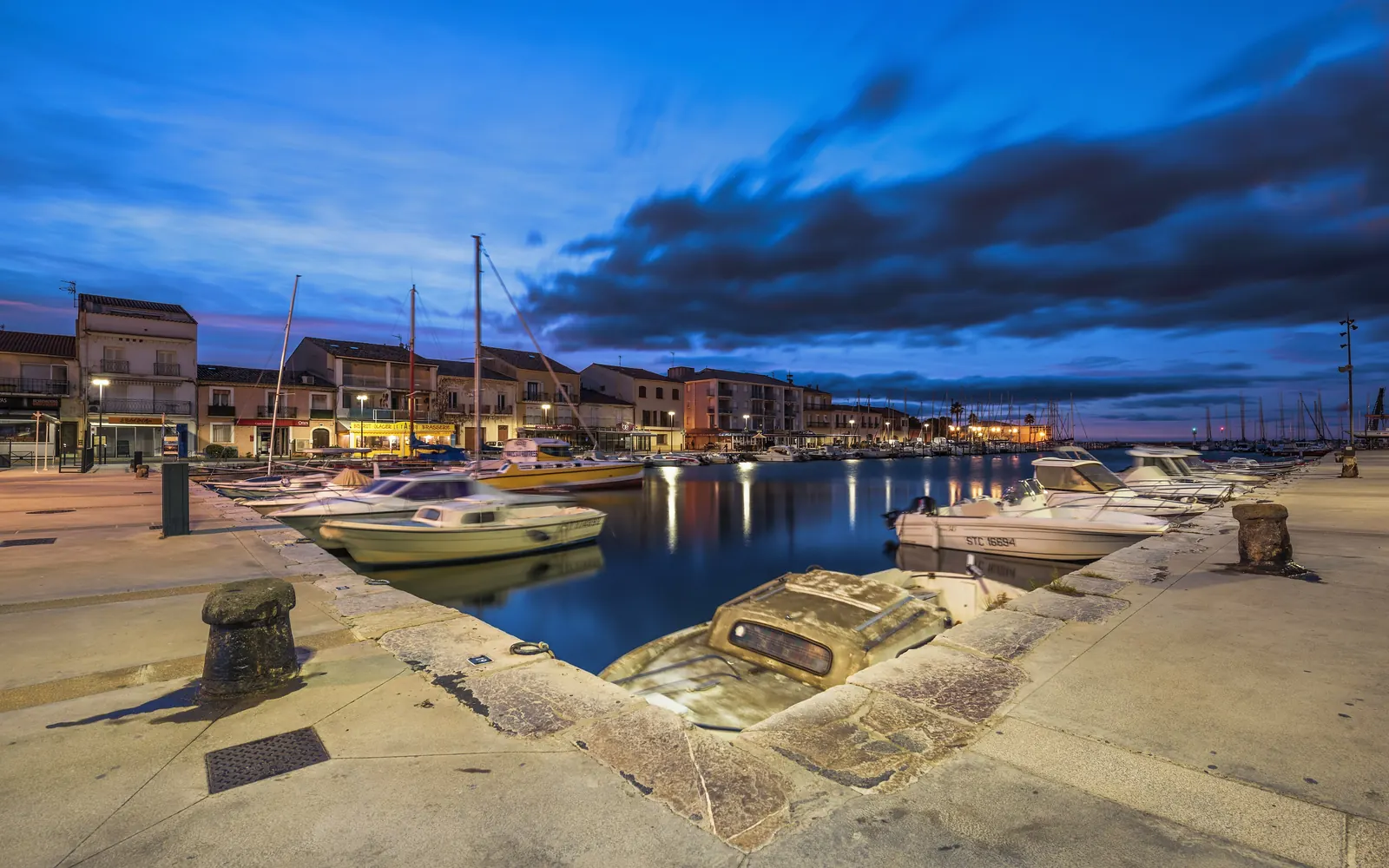
Photo: Christian Ferrer, CC BY 4.0, via Wikimedia Commons
The exact perimeter of the exclusive use with its times, the identity of the single point of contact, the format and timing of meals with the supplier, and the bad-weather fallback with its stated capacity.
The indoor rooms hold up to 60 people, and more than a hundred outside for a day or an evening. Accommodation on site is limited to 32 beds, across three villas.
One page is enough: the objective in a sentence, the dates, the number of participants, the accommodation constraint, and the running order you have in mind. The quotes you receive become immediately comparable.
What a turnkey offsite venue actually takes off your plate, and the questions to ask before you sign, so the six weeks before the date stay calm.
Read the article
Boxed lunches, cold buffets, a caterer chosen on price alone: what false savings on offsite meals really cost.
Read the article
A Friday-evening satisfaction score says almost nothing about the effect of an offsite. What to look at before, during, and three months later.
Read the articleThis site uses only functional cookies, which it needs in order to work. No advertising or tracking cookies are set. By continuing, you accept our privacy policy.
