

Business
What an offsite away from the office changes in the conversation
Why an offsite held away from the office produces different conversations, and the five practical conditions worth having in place.
Read the article
Like any investment, an offsite deserves to be well placed, properly costed and properly defended. What is decided at the approval meeting rarely turns on the amount: it turns on the way the amount is presented. Here is the method we see working for building an offsite budget and getting it approved.
Presented as a single envelope, an offsite budget mechanically draws a response about the amount. A five-figure number stays hard to judge for as long as it compares to nothing.
The first correction is arithmetical: three figures are worth more than one.
That third figure is what opens the conversation. It compares to benchmarks your leadership already knows: a day of external training, a hotel night plus lunch on a sales trip, a seat at an industry conference. The offsite then becomes a comparable unit rather than a sum.
A readable budget holds in five items, in this order:
1. Accommodation. Number of nights times number of participants. The simplest item, and often the largest.
2. Venue and working spaces. Room hire, equipment, exclusive use if applicable. Stating whether exclusivity is included or extra helps: it is the line that varies most from one venue to another.
3. Catering. Breakfasts, lunches, dinners, breaks. Counting it per meal per person, rather than as a package, leaves room to adjust it precisely.
4. Activities. Instructors, equipment, providers. The easiest item to flex.
5. Travel. The one item that escapes the venue, and often the one that decides the final choice.
A contingency line of five to ten per cent deserves a place there. It will be used, and having planned it spares you a second request.
They rarely appear in a quote, and they are quite real.
The organiser's time. Six weeks of coordination across five providers represents a volume of work that, converted to a salary cost, frequently exceeds the price gap between two venues. A venue that centralises everything and invoices once often comes to the same figure: it moves that cost from your payroll to a visible invoice.
The journey. A venue three hours away by train represents half a working day per participant, there and back. Across thirty people that becomes significant. It is also why proximity to a station matters as much as the price of a room. Here, Montpellier TGV station is 35 minutes away and the A9 exit under 30 minutes.
On-site transfers. When accommodation, the meeting room and meals are scattered, the day fills with shuttles and waiting. A single site gives that time back to the programme.
It is worth being precise here, because this is the ground on which an offsite presentation earns or loses its credibility. As far as we know, no reliable formula turns an offsite into a percentage of performance, and a quantified return on investment for this kind of event rarely survives three questions.
What is measurable, on the other hand, genuinely is:
Three simple indicators, taken before and after, carry a room more easily than a return-on-investment figure.
What gets a budget approved is a one-page document answering, in order, the questions leadership is going to ask:
| Line | Content |
|---|---|
| Objective | The two or three decisions this offsite must enable |
| Format | Number of days, number of participants, residential or not |
| Total cost | The amount |
| Cost per participant per day | The comparable figure |
| Comparison | One or two known internal benchmarks |
| What is included | Accommodation, room, catering, activities, in one line |
| What will be measured | The three chosen indicators, and on what date |
One page, seven lines. The budgets that pass most easily are the ones that arrive with the first line and with the last.
A well designed offsite costs the same as any other and moves three questions forward that had been waiting for six months. The gap between the two turns little on budget: it turns on the objective set at the outset, and on the venue chosen to serve it.
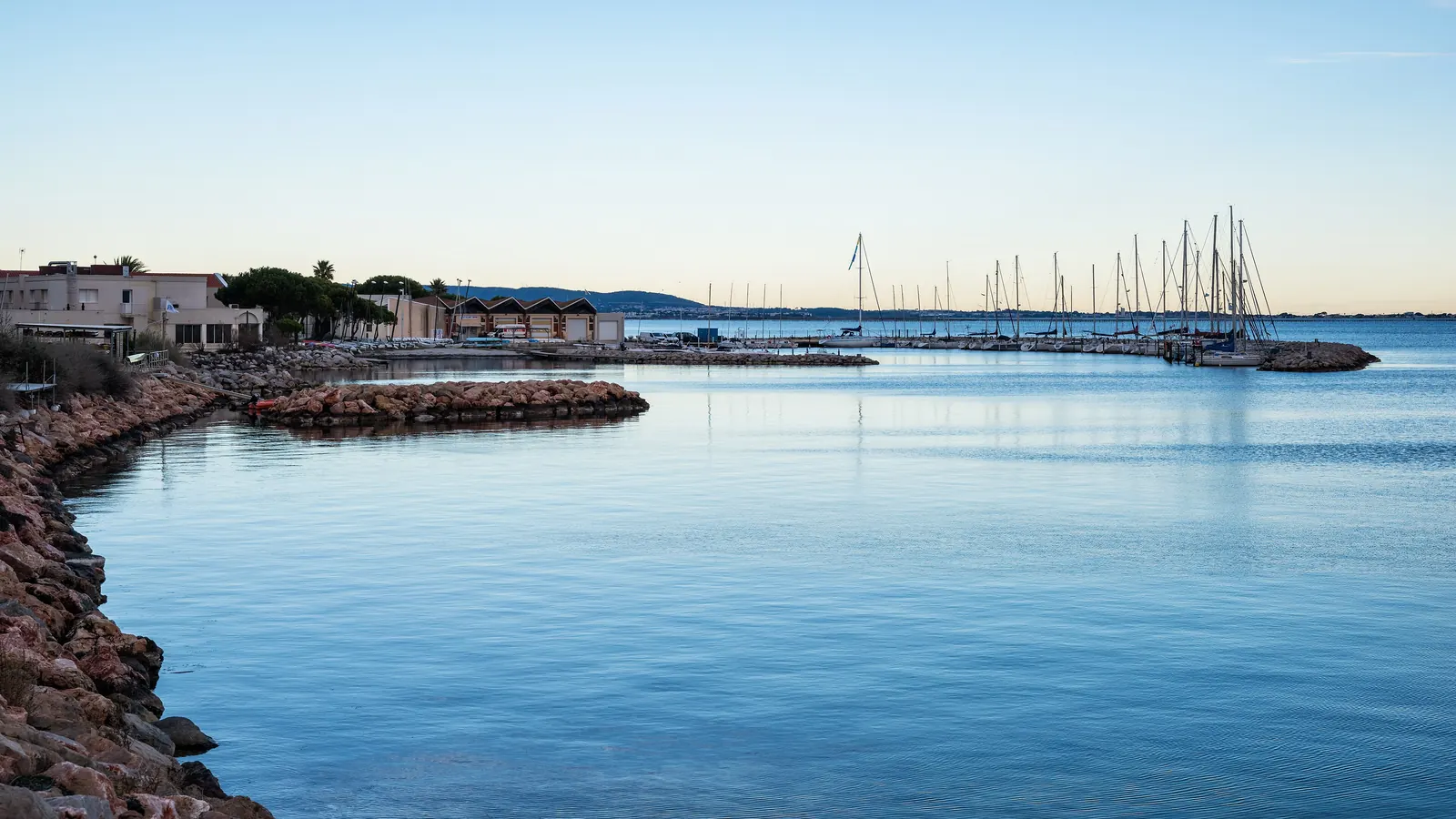
Photo: Olivier Dugornay / Ifremer, CC BY 4.0, via Wikimedia Commons
In three figures rather than one: the total, the cost per participant, and the cost per participant per day. The last is the only one that compares to benchmarks your leadership already knows, such as a day of external training or a night away on business.
As a percentage of performance, caution is in order: no reliable formula allows it, and a figure of that kind rarely survives three questions. Attendance, the number of decisions taken during the event and the time to implement them, on the other hand, genuinely can be measured.
The organiser's coordination time, travel multiplied by the number of participants, and on-site transfers when accommodation, meeting room and meals are scattered. They rarely appear in a quote, and they often weigh more than the price gap between two venues.
Why an offsite held away from the office produces different conversations, and the five practical conditions worth having in place.
Read the article
What a turnkey offsite venue actually takes off your plate, and the questions to ask before you sign, so the six weeks before the date stay calm.
Read the article
Why lunch decides half of an offsite day, how the format shapes the afternoon, and how to plan catering that keeps the day alive.
Read the articleThis site uses only functional cookies, which it needs in order to work. No advertising or tracking cookies are set. By continuing, you accept our privacy policy.
